- Breña
- Jesus Maria
- Lima
- San Francisco De Borja
- San Isidro
- Callao
- Cusco
- Santiago de Surco
- Miraflores
- Santa Anita - Los Ficus
- Arequipa
- Trujillo
- Tacna
- Villa Poeta José Gálvez Barrenechea
- Chiclayo
- Huancayo
- Puno
- Piura
- Iquitos
- Huacho
- Pucallpa
- Chincha Alta
- Sullana
- Chosica
- Government Palace, Peru
The Government Palace (Spanish: Palacio de Gobierno), also known as the House of Pizarro (Spanish: Casa de Pizarro), is the seat of the executive branch of the Peruvian government, and the official residence of the president of Peru. The palace is a stately government building, o
- Huaca Huantinamarca
The Huaca Huantinamarca is an archaeological site of the Ichma culture located in San Miguel District, in Lima, Peru. It is located on the first block of the Avenue Brígida Silva de Ochoa. On March 27, 2002, through National Directorial Resolution No. 233, the National Institute
- Arequipa Peru Temple
The Arequipa Peru Temple is a temple of the Church of Jesus Christ of Latter-day Saints, located in the Cayma District of Arequipa, Peru. It is the third constructed in Peru, following those in Lima and Trujillo, and the church's 167th operating temple worldwide. Announced on Oct
- Trujillo, Peru
Trujillo (Spanish: [tɾuˈxiʝo]; Quechua: Truhillu; Mochica: Cɥimor) is a city in coastal northwestern Peru and the capital of the Department of La Libertad. It is the third most populous city and center of the third most populous metropolitan area of Peru. It is located on the ban
- Archdiocese of Piura
The Roman Catholic Archdiocese of Piura (Latin: Archidioecesis Piurensis; Spanish: Arquidiócesis de Piura) is an archdiocese located in the city of Piura in Peru.
- Lord of Sipán
The Lord of Sipán (El Señor de Sipán) is the name given to the first of several Moche mummies found at Huaca Rajada, Sipán, Peru by archaeologist Walter Alva. The site was discovered in 1987. Some archaeologists consider this find to be one of the most important archaeological
- Archdiocese of Huancayo
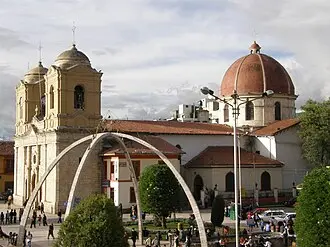
The Roman Catholic Metropolitan Archdiocese of Huancayo (Latin: Huancayen(sis)) is a Latin Metropolitan archdiocese in Peru's western Amazonian Junín Region. Its cathedral episcopal see is Catedral de la Santísima Trinidad (dedicated to the Holy Trinity) in the city of Huancayo.
- Cusco Cathedral
The Cathedral of Cusco (Spanish: Catedral de Cusco) or Cathedral Basilica of the Virgin of the Assumption (Spanish: Catedral Basílica de la Virgen de la Asunción) is the main temple of the city of Cusco, in Peru and houses the headquarters of the Archdiocese of Cusco. The Cathedr
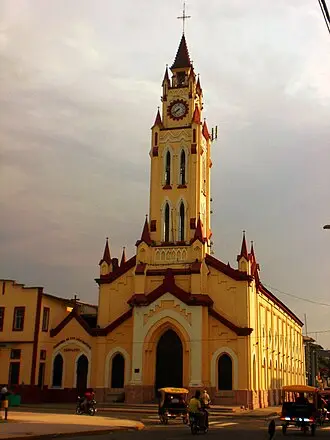
- Iquitos Cathedral
The St. John the Baptist Cathedral (Spanish: Catedral San Juan Bautista, Catedral Metropolitana de Iquitos) also called Iquitos Cathedral is the main Catholic church in neo-Gothic style in the city of Iquitos in Peru, with an important value in the historic center of the town. I
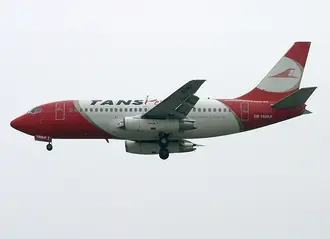
- TANS Perú Flight 204
TANS Perú Flight 204 was a domestic scheduled Lima–Pucallpa–Iquitos passenger service, operated with a Boeing 737-200, that crashed on 23 August 2005 on approach to Pucallpa Airport, 4 miles (6.4 km) off the airfield, following an emergency landing attempt because of bad weather,
- National Railway Museum (Peru)
The National Railway Museum of Peru is located in Tacna, Peru. The museum was built at the site of the old Tacna–Arica railway station, which connected the two cities. The museum features many preserved elements used during the second half of the nineteenth century before it was
- Central (restaurant)
Central is a restaurant located in the Barranco District, Lima, Peru. Central is the flagship restaurant of Peruvian chef, Virgilio Martínez Véliz, and serves as his workshop in the investigation and integration of indigenous Peruvian ingredients into the restaurant's menu. The r
- Huaca Pucllana
Huaca Pucllana, or Huaca Juliana, is a great adobe and clay pyramid located in the Miraflores district of central Lima, Peru, built from seven staggered platforms. It served as an important ceremonial and administrative center for the advancement of the Lima Culture, a society wh
- Lima Peru Temple
The Lima Peru Temple is the 38th operating temple of the Church of Jesus Christ of Latter-day Saints, located in La Molina, Lima Province, Peru. The intent to build the temple was announced on April 1, 1981, by church president Spencer W. Kimball during a press conference on Temp
- Chincha culture
The Chincha culture (or Ica-Chincha culture) was the culture of a Native Peruvian people living near the Pacific Ocean in southwest Peru. The Chincha Kingdom and their culture flourished in the Late Intermediate Period (900 AD–1450 AD), also known as the regional states period of
- Waru Waru
Waru Waru is a type of raised field agriculture developed by pre-Hispanic people in the Andes region of South America from Ecuador to Bolivia. This regional agricultural technique is also referred to as camellones in Spanish. Functionally similar agricultural techniques have been
- Gran Teatro Nacional del Perú
The Gran Teatro Nacional del Perú (Grand National Theater of Peru) is a multi-purpose theatre and concert hall in Lima, Peru. It is part of the Cultural Tridium, and is flanked by the National Library of Peru and the Museo de la Nación. The theatre was inaugurated on 23 July 2011
- Rímac River
The Rímac River [ˈri.mak] is located in western Peru and is the most important source of potable water for the Lima and Callao Metropolitan Area. It belongs to the Pacific Slope, into which it flows after bathing the cities of Lima and Callao, together with the Chillón River, to
- Historic Centre of Lima
The Historic Centre of Lima (Spanish: Centro histórico de Lima) is the historic city centre of the city of Lima, the capital of Peru. Located in the city's districts of Lima and Rímac, both in the Rímac Valley, it consists of two areas: the first is the Monumental Zone establishe
- Japanese embassy hostage crisis
The Japanese embassy hostage crisis (Spanish: Toma de la residencia del embajador de Japón en Lima, Japanese: 在ペルー日本大使公邸占拠事件, romanized: Zai Perū Nihon taishi kōtei senkyo jiken) began on 17 December 1996, when hundreds of high-level diplomats, government, and military officials
- Casona of the National University of San Marcos
The Casona of the National University of San Marcos (Spanish: Casona de la Universidad Nacional Mayor de San Marcos), also known as the Cultural Centre of San Marcos (Spanish: Centro Cultural de San Marcos, CCSM), which operates in the building, is a large Spanish colonial buildi
- Huaral province
Huaral is a province of the department of Lima, Peru. From the administrative point of view of the Catholic Church in Peru, it forms part of the Diocese of Huacho. Geographically, its territory extends around the valley of the Chancay River from the mountainous frontier of the Pa
- Battle of San Juan and Chorrillos
The Battle of San Juan and Chorrillos was the first of two main battles in the Lima campaign during the War of the Pacific, and was fought on 13 January 1881. This battle is really a group of smaller, yet fierce confrontations at the defensive strongholds of Villa, Chorrillos, Sa
- Huaura Museum
The Monumental Museum of the District Municipality of Huanta (Spanish: Museo Monumental de la Municipalidad Distrital de Huaura), also known simply as the Huaura Balcony (Spanish: Balcón de Huaura), is a war museum located in the Peruvian city of Huaura, dedicated to the memory o




By continuing to use the Platform, you agree to cookies and similar technologies. If you do not agree, discontinue use.
VIDI Privacy Policy
·
VIDI Cookie Policy
By continuing to use the Platform, you agree to cookies and similar technologies. If you do not agree, discontinue use.
VIDI Privacy Policy
·
VIDI Cookie Policy