- Nagoya
- Asakusa
- Yokohama
- Sapporo
- Fukuoka
- Taito
- Shibuya
- Osaka
- Sumida
- Arakawa
- Ōjima
- Setagaya
- Meguro
- Urayasu
- Tokyo
- Chiba
- Ichikawa
- Minato City
- Chiyoda
- Edogawe
- Chūō
- Yotsuya
- Honchō
- Shinjuku
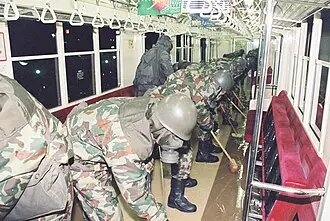
- Tokyo subway sarin attack
The Tokyo subway sarin attack (Japanese: 地下鉄サリン事件, Hepburn: Chikatetsu sarin jiken; lit. 'subway sarin incident') was a domestic chemical terrorist attack perpetrated on 20 March 1995, in Tokyo, Japan, by members of the Aum Shinrikyo cult. In five coordinated attacks, the perpetr
- Sankei-en
Sankei-en (三溪園, Three Creeks Garden) is a traditional Japanese-style garden in Naka Ward, Yokohama, Japan, which opened in 1906. Sankei-en was designed and built by Tomitaro Hara (原富太郎) (1868–1939), known by the pseudonym Sankei Hara, who was a silk trader. Almost all of its buil
- Osaka Science Museum
The Osaka Science Museum (大阪市立科学館, Ōsaka Shiritsu Kagakukan) is a science museum in Naka-no-shima, Kita-ku, Osaka, Japan. The museum is located between the Dōjima River and the Tosabori River, above Osaka's subterranean National Museum of Art. Opened in 1989, the museum was const
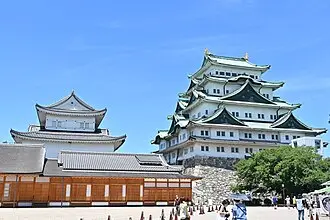
- Nagoya Castle
Nagoya Castle (名古屋城, Nagoya-jō) is a Japanese castle located in Nagoya, Japan. Nagoya Castle was constructed by the Owari Domain in 1612 during the Edo period on the site of an earlier castle of the Oda clan in the Sengoku period. Nagoya Castle was the heart of one of the most im
- Odori Park
Odori Park (大通公園, Ōdōri Kōen) is a park located in the heart of Sapporo, Hokkaido, Japan. Ōdōri (大通) means "large street" in Japanese. It stretches east to west through Nishi 1 chōme, Ōdōri to Nishi 12 chōme, Ōdōri ("Nishi" means west, and "chōme" is a block in Japanese), and div
- Fukuoka Castle
Fukuoka Castle (福岡城, Fukuoka-jō) is a Japanese castle located in Chūō-ku, Fukuoka, Japan. It is also known as Maizuru Castle (舞鶴城 Maizuru-jō) or Seki Castle (石城 Seki-jō). Completed in the early Edo period for tozama daimyō Kuroda Nagamasa, it has been designated a National Histor
- Kanamara Matsuri
The Shinto Kanamara Matsuri (かなまら祭り, "Festival of the Steel Phallus") is an annual Japanese festival held each spring at the Kanayama Shrine (金山神社, Kanayama-jinja) in Kawasaki, Japan. The exact dates vary: the main festivities fall on the first Sunday in April. The phallus, as th
- Chiba Shrine
Chiba Shrine (千葉神社, Chiba-jinja) is a Shinto shrine located in Chūō-ku, Chiba City, Chiba Prefecture. Originally a Buddhist temple dedicated to the deity Myōken, the patron of the Chiba clan, it was converted into a Shinto shrine dedicated to Ame-no-Minakanushi (a kami in Japanes
- Hasegawa Machiko Art Museum
The Hasegawa Machiko Art Museum (長谷川町子美術館, Hasegawa Machiko Bijutsukan) is an art museum in Setagaya, Tokyo, Japan. From 1946 until 1974, Machiko Hasegawa drew the comic strip Sazae-san about an ordinary Japanese family led by a good-natured mother and wife, Sazae. The strip was
- Omori Nori Museum
The Omori Nori Museum (Japanese: 大森 海苔のふるさと館) is a museum dedicated to the history, culture and creation process of nori, a type of edible Japanese seaweed.
- Musashigawa stable (2013)
The Musashigawa stable (Japanese: 武蔵川部屋, Hepburn: Musashigawa-beya) is a stable of sumo wrestlers, part of the Dewanoumi ichimon or group of stables. It is an off-shoot of the better known stable of the same name set up by former yokozuna Mienoumi in 1981, which is currently know
- Tokyo Denki University
Tokyo Denki University (東京電機大学, Tōkyō denki daigaku) is a private university in Adachi, Tokyo, Japan. The predecessor of the school was founded in 1907 as Denki Gakkō (電機学校). It was chartered as a university in 1949 with Yasujiro Niwa as first president. Denki (電機) means an elect
- Ebi River
The Ebi River (海老川, Ebigawa) is a river in Funabashi, Chiba Prefecture, Japan. It is 2.67 kilometers (1.66 mi) in length and has a drainage area of 260 square kilometers (100 sq mi). Under the Japan Rivers Act of 1906 the river is designated as a Class 2 River. The Ebi originates
- Former Tanaka Family Residence
The Former Tanaka Family Residence (旧田中家住宅) is a Japanese western-style building located in Suehiro, Kawaguchi, Saitama Prefecture. The building was constructed in 1923 for Tokubei Tanaka, a miso industrialist who later became a politician. The residence is not to be confused wit
- Inari-yu
Inari-yu is a Japanese communal bathhouse (sentō) in Kita, Tokyo in Japan. It was built in 1930 with traditional architecture of Japanese temples. This building was listed as a Registered Tangible Cultural Property in 2019. It was the second bathhouse in Tokyo and only dozens mor
- Shibamata Taishakuten
Daikyō-ji (題経寺), popularly known as Shibamata Taishakuten (柴又帝釈天), is a Nichiren-shū Buddhist temple in the Shibamata neighbourhood of Katsushika, Tokyo, Japan. Founded in 1629, the main image is of Taishakuten. In 1996 the Ministry of the Environment designated the temple and it
- Chiba Museum of Science and Industry
Chiba Museum of Science and Industry (千葉県立現代産業科学館, Chiba-kenritsu gendai sangyō kagaku-kan) is a science museum located in Ichikawa, Chiba Prefecture, Japan. The museum introduces mainly topics related to technology, for modern industry. The museum sets up its goal as to provide
- Ayase River
The Ayase River (綾瀬川, Ayase-gawa) is a river in Japan.
- Shinjuku Ni-chōme
Shinjuku Ni-chōme (新宿二丁目), referred to colloquially as Ni-chōme or simply Nichō, is Area 2 in the Shinjuku District of the Shinjuku Special Ward of Tokyo, Japan. With Tokyo home to 13 million people, and Shinjuku known as the noisiest and most crowded of its 23 special wards. Ni
- Iwatsuki Castle
Iwatsuki Castle (岩槻城, Iwatsuki-jō) is a Japanese castle located in Iwatsuki-ku, Saitama, in Saitama Prefecture, Japan. At the end of the Edo period, Tateyama Castle was home to the Ōoka clan, daimyō of Iwatsuki Domain, however the castle dates from the Muromachi period and was in
- Renkō-ji
Renkō-ji (蓮光寺, Renkōji) is a Buddhist temple in Suginami-ku, Tokyo. The small, well-preserved temple was established in 1594 inspired by the God of Wealth and Happiness. It belongs to the Nichiren sect of Buddhism that believes that human salvation lies only in the Lotus Sutra. I
- Ōji Shrine
Ōji Shrine (王子神社, Ōji-jinja) is a Shinto shrine located in the Kita ward of Tokyo, Japan. Established during the Kamakura period, most likely around 1321–1324, the shrine gives the name of "Ōji" to this area of the city. Most of the original buildings in the shrine precincts were
- Tombow
Tombow Pencil Co., Ltd. (株式会社トンボ鉛筆, Kabushiki-gaisha Tonbo Enpitsu) is a private Japanese manufacturing company of stationery products. The company was founded in 1913 as Messrs "Tombow" and has since grown into an international business. Based in Tokyo with 397 employees. Tombow
- Tokyo Photographic Art Museum
The Tokyo Photographic Art Museum (東京都写真美術館, Tōkyō-to Shashin Bijutsukan) is an art museum concentrating on photography. As the Tokyo Metropolitan Museum of Photography, it was founded by the Tokyo Metropolitan Government, and is in Meguro-ku, a short walk from Ebisu station in s




By continuing to use the Platform, you agree to cookies and similar technologies. If you do not agree, discontinue use.
VIDI Privacy Policy
·
VIDI Cookie Policy
By continuing to use the Platform, you agree to cookies and similar technologies. If you do not agree, discontinue use.
VIDI Privacy Policy
·
VIDI Cookie Policy